send an email - go to the contact page We are a 501(c)4
LATEST NEWS
isit PEN for in-depth coverage of how America is addressing the climate crises. Systemic racism has held back progress, along with the deep pockets of industry that don’t want to change the status quo.
Protect Earth Newsmagazine highlights what lawmakers from the local level on up to the Federal Government are doing to protect the earth. We also report on community ingenuity and innovations that will help the U.S.A. transition to being powered by 100 percent, clean renewable energy. A 501(c)4
August 18, 2026 Scientists spent years worried a floating wind farm off Portugal’s coast would wreck the ecosystem underneath it. Instead, they found more octopus, more fish, and more sole living there than before. A study conducted on the WindFloat Atlantic project, a floating offshore wind farm anchored more than 11 miles off Viana do Castelo, Portugal, found the installation […]
August 18, 2026
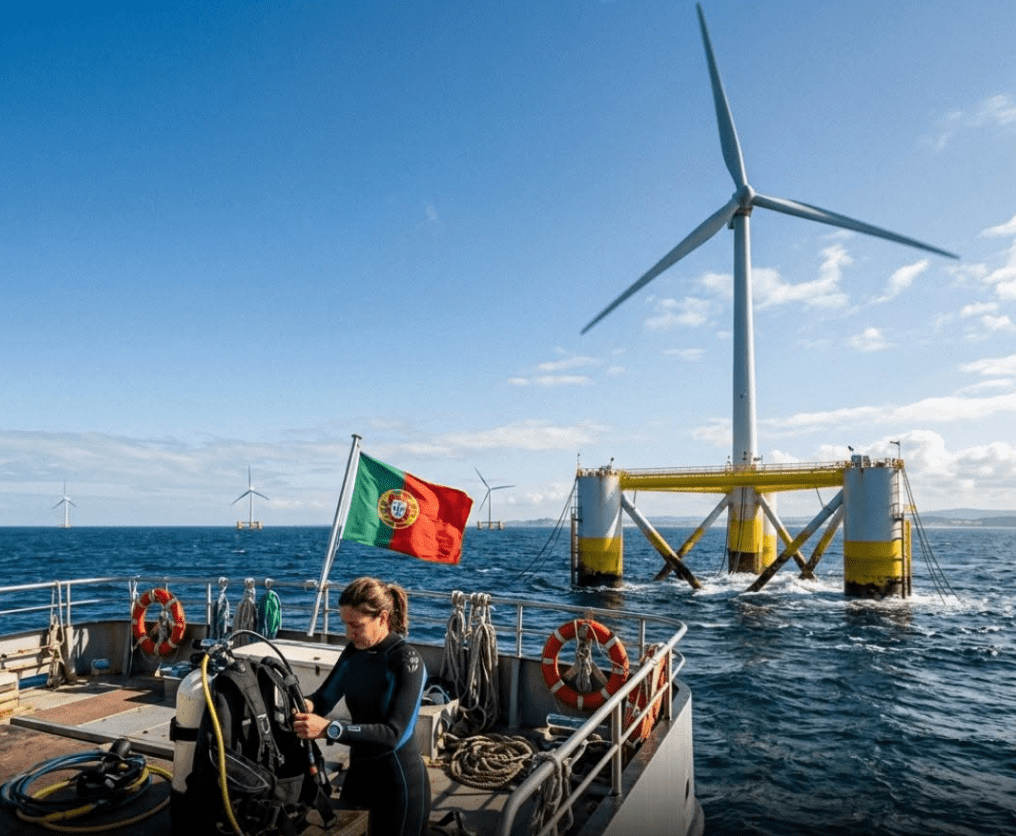
Scientists spent years worried a floating wind farm off Portugal’s coast would wreck the ecosystem underneath it. Instead, they found more octopus, more fish, and more sole living there than before.
A study conducted on the WindFloat Atlantic project, a floating offshore wind farm anchored more than 11 miles off Viana do Castelo, Portugal, found the installation had no measurable negative effect on plankton communities or the wider marine ecosystem, according to research published in 2026. More surprisingly, researchers recorded greater abundance of fish, octopus, and sole in the immediate area around the turbines than in comparable open water nearby, with the floating platforms themselves improving the substrate of the sea bottom and creating a reef-like effect that attracted mussels, kelp, and barnacles.
The project uses three 8.4-megawatt turbines mounted on semi-submersible platforms, technology pioneered in Portugal and built at shipyards in Setúbal, designed specifically for waters too deep for conventional fixed-bottom turbines. It builds directly on the earlier WindFloat Demo, the world’s first floating turbine prototype, which survived winds of 41 meters per second and 17-meter waves off Aguçadoura between 2011 and 2016 without failure, proving the underlying platform design could handle the Atlantic’s harshest conditions.
For an industry that’s spent years defending itself against assumptions that offshore wind automatically harms marine life, a floating farm that appears to be quietly rebuilding habitat instead is a genuinely unexpected result worth paying attention to.
Maine Insights, a 501(c)4, connects our main streets with lawmakers in Augusta, highlighting state policies, technological innovations, agriculture, education, community growth and economics with factual analysis, individual profiles and exclusive in-depth coverage. We also report on areas where justice is not being served in the hope to be a contributing catalyst for change.
Your contribution today, will ensure our reporting continues into the future. Please send your donation to 8 Brook St., Solon, ME 04979.
Visit PEN for in-depth coverage of how America is addressing the climate crises. Systemic racism has held back progress, along with the deep pockets of industry that don’t want to change the status quo.
Protect Earth Newsmagazine highlights what lawmakers from the local level on up to the Federal Government are doing to protect the earth. We also report on community ingenuity and innovations that will help the U.S.A. transition to being powered by 100 percent, clean renewable energy. A 501(c)3 project of the Solon Center for Research and Publishing.
LATEST NEWS
SCIENCE MONDAY
Helpful science tips in playful videos that explain principles we all deal with to understand our climate crisis. The PENseries is the creation of Olivia Baaten.