
By Ramona du Houx
April 1, 2024
Purpose-built port facility will establish Maine’s place in growing offshore wind industry, become hub for job creation and economic development and is welcomed by a strong and diverse coalition of environmental, labor, and economic organizations
Late in February, 20024, Governor Janet Mills announced that the State of Maine has selected a section of state-owned Sears Island that is reserved for port development as its preferred site for a port facility to support the floating offshore wind industry.
The opportunities for good paying Union jobs are vast and sustaining. The port will revitalize the area, giving the midcoast a boon especially during the winter season when the tourists don’t come.
“This was not an easy decision, nor is it one that I made lightly. For more than two years, my Administration has evaluated Sears Island and Mack Point thoroughly and with an open mind, recognizing that each site has its own set of benefits and its own set of drawbacks. In carefully considering all of these, I believe that, on balance, Sears Island is the best choice for an offshore wind port because it is already owned by the state, designated for the purpose of port development, will cost less in the short-term and long-term, and is expected to result in less environmental harm,” said Governor Janet Mills.
“With that said, I recognize that the construction of a port is not insubstantial, and it will be a change to an area that is enjoyed by many people, I take these changes seriously, and I recognize their impact. However, in weighing the costs and benefits of both locations, I cannot escape the conclusion that the parcel on Sears Island fundamentally makes the most sense and provides us with the best opportunity to responsibly advance offshore wind in Maine, an industry that will create good paying jobs for Maine people and deliver clean, renewable energy to stabilize and reduce energy prices for Maine people and businesses in the long run.”
The selection of the site follows an extensive public stakeholder process led by the Maine Department of Transportation and Maine Port Authority to consider the State’s primary port development options, including multiple potential sites in the Port of Searsport, the Port of Eastport, and the Port of Portland.
The State concluded that the Sears Island parcel is the most feasible port development site in terms of location, logistics, cost, and environmental impact based on input from port and offshore wind stakeholders, including the University of Maine, and on technical and engineering analyses.
“Searsport has a long and rich history of building vessels and sailing from Penobscot Bay to ports all around the world,” said James Gillway, Searsport Town Manager and cochair of the Offshore Wind Port Advisory Group. “We are very proud of this history, and we see the construction of a floating offshore wind port as a modern-day continuation of that vessel-building tradition. I am pleased that four years of hard work and public engagement have resulted in today’s selection of a wind port location. This decision keeps the ball rolling and moves us much closer to the State’s goals. I look forward to working with the governor’s office and MaineDOT to build a state-of-the-art port facility that is environmentally friendly and mitigating the impacts of this development on the local community and environment.”
Sears Island is a 941-acre island off the coast of Searsport. In 2009, Sears Island was, by agreement, divided into two parcels: approximately 601 acres, or two-thirds of the island, was placed in a permanent conservation easement held by the Maine Coast Heritage Trust, while the remaining one-third, or approximately 330 acres, was reserved by MaineDOT for future development.

The site selected by the State today is expected to be about 100 acres in totality, which is about one-third of the State-owned parcel or a little more than one-tenth of the entire island.
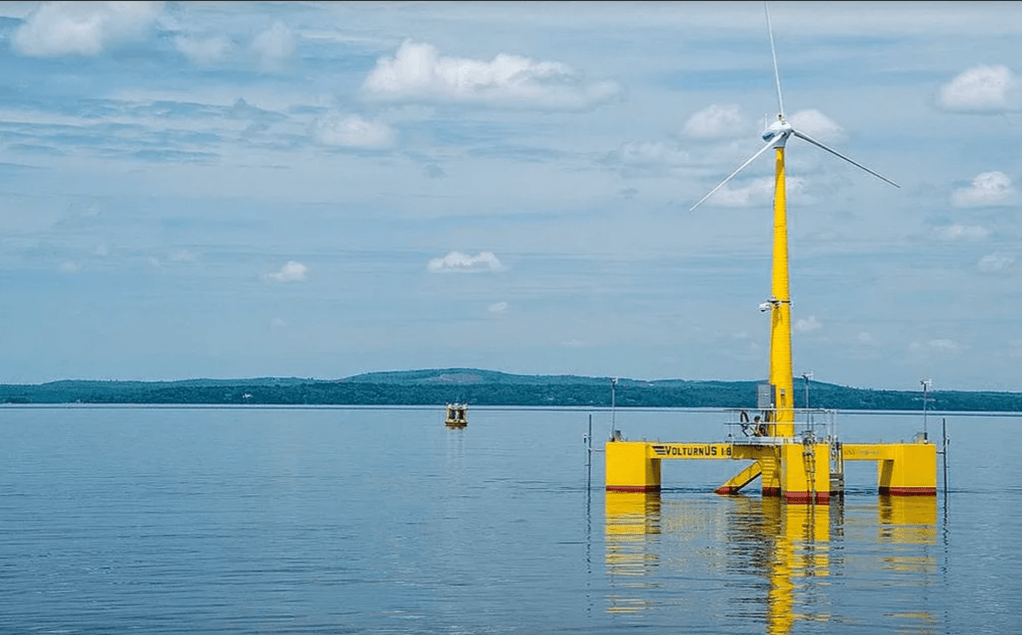
“A port facility is a critical step to realize the economic and environmental benefits of a new floating offshore wind industry. The port will be used to produce floating turbines, designed here in Maine using innovative technology developed by University of Maine researchers, and towed out and moored beyond the horizon to harness clean energy for our state. Much like creating a shipyard, this port will usher in a new era of energy independence enabling us to more affordably heat our homes, stabilize our energy costs, and create good-paying Maine jobs,” said Habib Dagher, the founding director of the University of Maine Advanced Structures and Composites Center. “It has been an honor for the university to have partnered with the State for over 15 years to develop this advanced technology, and to have reached this exciting moment under Governor Mills’ leadership and with the support of the people of Maine, the Legislature, our federal delegation and the U.S. Department of Energy.” (prototype of UMaine’s design in photos)
The proposed port would be a purpose-built facility for floating offshore wind fabrication, staging, assembly, maintenance, and deployment. With deepwater access to the port development site, Maine has the potential to establish a premier location for the industry and help meet growing demand in the U.S. for offshore wind port infrastructure.
“Maine has a once-in-a-lifetime opportunity to help transform its economy and protect our environment by leveraging our North Atlantic winds, our maritime and manufacturing skills, and land reserved for port development to responsibly bring the multi-billion-dollar floating offshore wind industry to our doorstep,” said Bruce Van Note, Commissioner of the Maine Department of Transportation. “The decision to pursue port development on Sears Island is in the best interest of our state’s economy and our climate. I hope Maine seizes this opportunity.”
The Maine Offshore Wind Roadmap, released one year ago, determined a port facility is a priority for unlocking Maine’s opportunity in offshore wind to create good-paying jobs, spurring broad economic development, and generating abundant clean electricity to stabilize energy costs and reduce reliance on fossil fuels.
“We appreciate and applaud Governor Mills’ common-sense decision to site Maine’s floating offshore wind port facility on Sears Island,” said Captain David Gelinas of the Penobscot Bay & River Pilots Association. “Decades ago, Maine taxpayers invested millions of dollars in transportation funds for port development on the island, including funding for navigation improvements that rendered sufficiently deep water to avoid the need for new dredging there. A Sears Island location for this new facility will minimize impacts from southerly winds and seas, while providing safe shelter for smaller vessels that will be necessary to service the port. The site offers the most direct approach in and out of the Searsport navigation channel and allows the existing docks at Mack Point to continue accommodating the myriad vessels necessary to serve Maine’s businesses and consumers. We look forward to participating in the next chapter of Searsport’s maritime heritage.”
In March 2020, Governor Mills directed MaineDOT to study the Port of Searsport to assess needs to support Maine’s offshore wind industry. An active seaport since the 1700s, the Port of Searsport is among the most versatile port sites on the East Coast.
“The development of Maine’s port infrastructure is a cornerstone in realizing the economic dividends of an offshore wind industry and further expanding our international trade,” said Patrick Woodcock, President and CEO of the Maine State Chamber of Commerce. “There is an acute scarcity of unobstructed deepwater access across the eastern seaboard, and Maine has the opportunity to develop a world-class facility and finally realize the vision of the state’s three-port strategy. The Maine State Chamber of Commerce supports the leadership of the Mills Administration in identifying this site and looks forward to engaging in the permitting process to develop this infrastructure.”
The study (PDF), delivered in November 2021, evaluated various locations in the Port of Searsport for an offshore wind port, including Mack Point and an area of state-owned Sears Island. At that time, Governor Mills announced the State’s intention to explore port development to support floating offshore wind and directed MaineDOT to conduct a robust public process and engage with key stakeholders and community organizations.
In March 2022, MaineDOT announced the creation of a 19-member Offshore Wind Port Advisory Group to advise the State on port development. The Group, which included a broad spectrum of state and local stakeholders, held six public meetings in 2022 and 2023 and toured existing port facilities in Searsport and Eastport to inform its work.
The following factors support State’s selection of the Sears Island site:
- The State of Maine owns the parcel of land on Sears Island;
- The parcel of land on Sears Island has been reserved since 2009 for development;
- As a large, level area with deepwater access, the Sears Island site has beneficial physical and logistical characteristics for building a port facility at the scale required to support floating offshore wind port operations;
- Unlike adjacent Mack Point, the Sears Island site is not expected to require dredging, a key environmental and financial consideration for a port project;
- The Sears Island site would avoid impacts on existing commercial or industrial activities in the Port of Searsport;
- Because the parcel of land on Sears Island is owned by the State, the upfront and ongoing costs for a port facility are estimated to be substantially less than on Mack Point, which is privately owned and would require monthly lease fees.
The estimated port construction cost on the Sears Island site is approximately $500 million. The State is seeking funding opportunities for the port, such as from Federal sources expanded under the Bipartisan Infrastructure Law, which recently awarded funds to support a floating offshore wind port in California.
The port proposal is subject to extensive and independent State and Federal permitting processes, including assessments of environmental impacts and alternative sites. MaineDOT, on behalf of the State, intends to apply for permits later this year, which will also include additional opportunities for stakeholder and public input on the project.
Maine Offshore Wind Roadmap
The selection of a port site reflects a priority of the Maine Offshore Wind Roadmap, a stakeholder-driven comprehensive plan that offers detailed strategies for Maine to realize economic, energy, and climate benefits from offshore wind, in conjunction with communities, fisheries, and wildlife of the Gulf of Maine.
Released one year ago, the Roadmap has guided action toward responsible offshore wind in Maine, through landmark legislation, offshore wind research, workforce and supply chain development, regional transmission and grid planning, and advocacy for Maine’s interests in Federal actions on commercial wind leasing in the Gulf of Maine.
In July 2023, Governor Mills signed LD 1895, legislation to advance offshore wind in Maine by procuring up to 3,000 MW of offshore wind energy, creating opportunity for all Maine workers and businesses in the emerging offshore wind industry, and protecting critical lobstering areas from development.
The State has proposed to lease a site in Federal waters of the Gulf of Maine for a Floating Offshore Wind Research Array. An application for that lease site remains pending before the Bureau of Ocean Energy Management (BOEM), the Federal agency charged with leasing ocean areas for offshore wind development.
As the first project of its kind in the United States, the research array will foster cutting-edge research into the cost-effective operation of floating offshore wind and how it interacts with the marine environment, wildlife, the fishing industry, shipping and navigation routes, and more.
The array is proposed to include 10–12 turbines on semi-submersible floating concrete platforms known as VolturnUS, designed by the University of Maine’s Advanced Structures and Composite Center. The final size and location of the research site will be determined by BOEM during its leasing review process.
In January 2023, BOEM released its draft area for potential commercial offshore wind leasing in the Gulf of Maine. In November, Governor Mills joined Maine’s Congressional Delegation to request Lobster Management Area 1, a highly productive fishing ground, be excluded from offshore wind siting maps.
As this process unfolds, Governor Mills continues to press the U.S. Department of the Interior, which oversees BOEM, to involve Maine fishermen in Federal plans for leasing in the Gulf of Maine for commercial offshore wind.
To preserve State waters for recreation and fishing and cement into law Maine’s priority of locating offshore wind projects in Federal waters in the Gulf of Maine, Governor Mills in 2021 signed LD 1619, which prohibits new offshore wind projects in State waters.
Other offshore wind initiatives include the Maine Offshore Wind Research Consortium, an assembly of fisheries, wildlife, and marine science and industry experts advising the State’s offshore wind research; and advocating for Maine’s interests in Federal plans for commercial offshore wind leasing through the Gulf of Maine Task Force.
View visuals of Sears Island (PDF) and the Port of Searsport (PDF), including the proposed area for the port to support floating offshore wind.


 Maine Insights Newsmagazine