New report and online dashboard released on December 1, 2023 show Maine’s progress on strategies to reduce greenhouse gas emissions and prepare for climate effects
A $3 million grant from the U.S. Environmental Protection Agency from the Inflation Reduction Act was awarded to the council to help facilitate the work
December 1, 2023
Augusta, MAINE – The Maine Climate Council today released its third annual report on the progress under Maine Won’t Wait (PDF), the state’s nationally-recognized climate action plan to address the impacts of climate change on Maine, build resiliency to climate effects, and meet state statutory targets to reduce greenhouse gas emissions.
The Council released this progress report and updated online dashboard during its regular meeting in Augusta. The Council is a 39-member assembly of scientists, industry leaders, bipartisan local and state officials, and engaged citizens created by Governor Janet Mills to develop and oversee implementation of a climate plan for Maine every four years.
“We are proud of the work by so many people, communities, and organizations to advance the objectives of Maine Won’t Wait,” said Hannah Pingree, Director of the Governor’s Office of Policy Innovation and the Future, and Melanie Loyzim, Commissioner of the Maine Department of Environmental Protection, co-chairs of the Maine Climate Council. “With climate effects on Maine, our nation, and our world remaining dire, but the financial and technical support to address climate arguably never greater, we are committed to ensuring Maine will not wait to protect its communities, people and economy from climate change.”
Following an extensive public process, the Council delivered its first four-year plan to prepare for and mitigate effects of climate change on Maine, Maine Won’t Wait, to Governor Mills on December 1, 2020.
The progress report and dashboard released today by the Council highlights key actions and milestones under Maine Won’t Wait to date, which include:
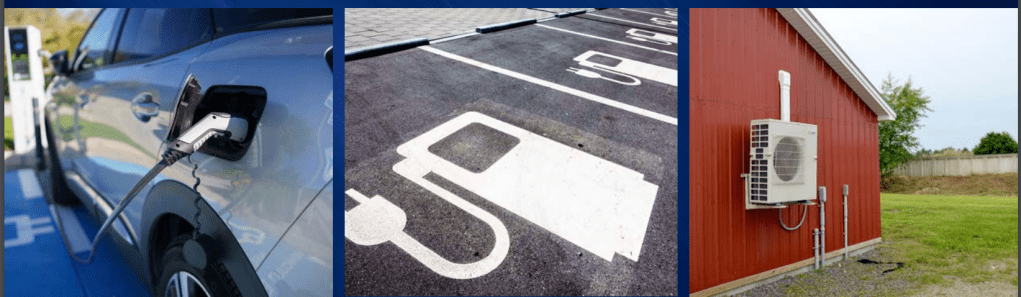
Heat Pumps: More than 115,000 new high-efficiency heat pumps have been installed in Maine, surpassing the climate plan’s 2025 goal of 100,000 new heat pumps two years early. In response to this progress, Governor Mills has set a new ambitious target of 175,000 additional heat pumps in Maine by 2027.
Weatherization: The number of Maine homes weatherized increased by 39 percent — from 9,135 to 12,705 — from 2022 through 2023. The climate plan’s goal calls for weatherizing 17,500 homes by the end of 2025.
Renewable Energy: By the end of 2023, 51 percent of energy consumed in Maine will come from renewable sources, per bipartisan legislation signed by Governor Mills in 2019. The state’s statutory goal is using 80 percent renewable energy by 2030, a target Governor Mills has committed to accelerate to 100 percent clean energy by 2040.
Clean Energy Jobs: Through 2023, there are now more than 15,000 jobs in Maine’s clean energy and energy efficiency sector, surpassing the halfway point of the state’s goal to have 30,000 clean energy jobs by the end of the decade.
Public Electric Vehicle Charging: The availability of public electric vehicle charging stations has more than doubled in Maine since 2019, from 184 to 459, with future expansion planned through the state’s Recharge Maine initiative.
Electric Vehicles: Through 2023, the number of registered battery and plug-in hybrid electric vehicles in Maine increased by 33 percent, from 9,244 in 2022 to 12,369 in 2023. Emissions modeling for the climate plan indicated Maine would need 219,000 EV’s by 2030 to support progress toward reduction targets.
Community Climate Planning: To date, 174 Maine communities are participating in the Community Resilience Partnership, a state program to provide funding and technical assistance for towns, cities, and tribal governments to address local climate priorities. The program launched just two years ago with an initial goal of 100 communities in its first year.
In addition to progress toward key milestones, the dashboard and progress report released today includes a variety of additional data sources on climate and clean energy in Maine, such as land conservation and clean energy generation.
It also includes data regarding how programs and investments are reaching vulnerable communities, such as the number of weatherization projects and heat pump installations in low-income households in Maine. Going forward, the climate council will incorporate tracking of further equity metrics to ensure benefits are reaching all people in Maine.
By law, the Council must deliver an updated four-year climate plan by Dec. 1, 2024. Work on this update will be supported in part by a $3 million grant from the U.S. Environmental Protection Agency from the Inflation Reduction Act.
Since 2019, the Mills Administration has prioritized the fight against climate change in Maine through actions to reduce carbon emissions, transition to renewable energy, and make Maine communities more resilient to climate effects.
With bipartisan support of the Legislature, Maine in 2019 enacted laws setting ambitious targets for transitioning to renewable energy and reducing greenhouse gas emissions. These include reducing greenhouse gas emissions in Maine by 45 percent by 2030 and 80 percent by 2050. Governor Mills also pledged that Maine would become carbon-neutral by 2045, a commitment she signed into law in 2022.
Governor Mills also serves as Co-Chair of the U.S. Climate Alliance, a bipartisan coalition of 25 governors committed to fighting climate change by reducing carbon emissions, advancing clean energy, and protecting people and the environment from the effects of the climate crisis.



 Maine Insights Newsmagazine