December, 2020 By Ramona du Houx In September we lost a national icon, United States Supreme Court Justice Ruth Bader Ginsburg (RGB). Ginsburg strengthened equal rights all, protections for women and was a reliable vote for the environment. Her opinions in many decisions that impacted environmental law were key. Massachusetts v. EPA allowed the federal government to regulate greenhouse gas […]
December, 2020
By Ramona du Houx
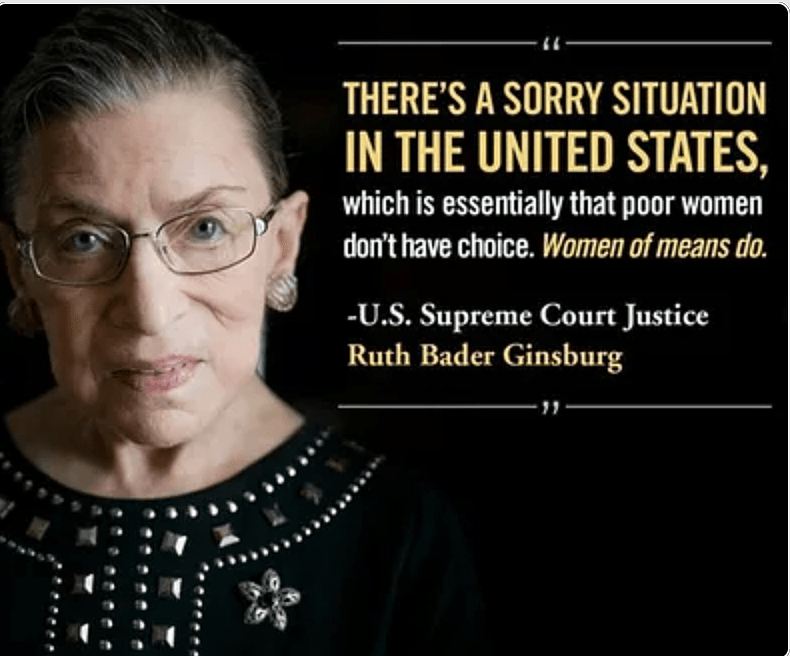
In September we lost a national icon, United States Supreme Court Justice Ruth Bader Ginsburg (RGB). Ginsburg strengthened equal rights all, protections for women and was a reliable vote for the environment. Her opinions in many decisions that impacted environmental law were key. Massachusetts v. EPA allowed the federal government to regulate greenhouse gas emissions as “air pollutants” under the Clean Air Act. Friends of the Earth v. Laidlaw Environmental Services affirmed the right of residents to sue an industrial polluter. Now, Ginsburg’s legacy is in danger, and with it the health and well-being of millions of Americans.
“The fight for women’s rights and environmental protections are interdependent. They are at risk when they are judged by ideologies. This occurs daily around the globe, and without a standard barrier of impartiality on the Supreme Court, American justice will be weakened along with environmental and equality rights,” said Alex Cornell du Houx, a former Maine state lawmaker, Marine combat veteran, and President of Elected Officials to Protect America. (EOPA).
While Judge Amy C Barrett was careful not to answer questions in her Senate hearings, the proceedings excluded her religious beliefs because of the controversy that topic would spark. However, in her writings, legal opinions and previous actions it has been proven that she holds extreme conservative views. Now she’s been confirmed. Weeks afterwards, America voted in the first African American/Indian woman, Vice President-elect Kamala Harris.
American democracy gives hope for women everywhere, but in order for progress to be made lawmakers across the country have to be willing to stand up for equal rights and justice for all to counter forces that want to stem or reverse progress.
“It’s imperative that lawmakers around the country uphold environmental protection laws, equal rights for all and strengthen laws against environmental injustices. Systemic racism wouldn’t still be a problem if our laws hadn’t codified it. For example, redlining, the process of discrimination against people of color from obtaining loans, has excluded too many for too long from the American Dream of owning a home or business,” said Oregon State Representative Major Paul L. Evans USAF (Ret.), Elected Officials to Protect America Co-Chair.
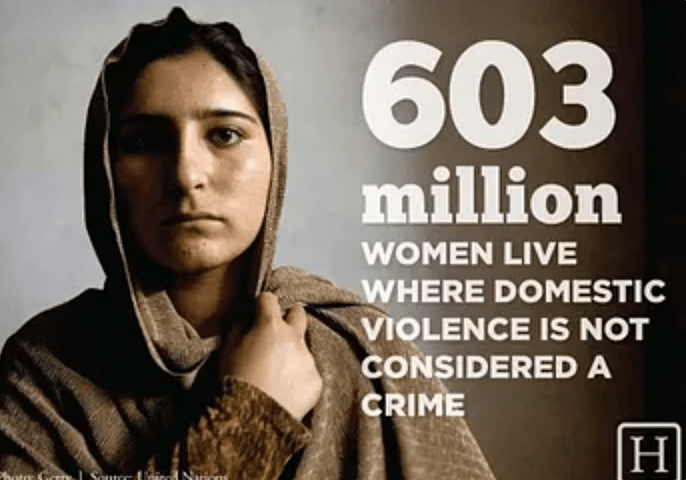
Research shows, violence against females increases with environmental disasters caused by climate change and environmental exploitation around the world. In a report by the International Union for the Conservation of Nature (IUCN) six in ten respondents said that they’d seen gender-based violence, which includes domestic violence, rape, forced prostitution, child marriages, and other forms of the exploitation of women, inflicted upon female environmental migrants, refugees, and environmental rights defenders in places where the climate crisis and environmental exploitation has caused economic stresses.
The IUCN uncovered examples of this gender-based violence with increases in human and sexual trafficking. In Colombia and Peru illegal mines have been linked to an increase in sex trafficking. The Democratic Republic of Congo illegal logging and the charcoal trade are linked to sexual exploitation. In south-east Asia and eastern and southern Africa reports say sexual abuse and exploitation are pervasive in illegal fishing industries.
In many countries’ women can’t own land and have few legal rights making them more vulnerable in male dominated societies. In many countries when a family is faced with hardships exacerbated by the climate crisis, such as lower crop yields, girls are married off at younger ages to bring in income for the family. It’s estimated that over 12 million girls have been married off as youngsters mainly due to climate change economic stresses. Climate disasters have been shown to lead to a 20 to 30 percent increase in sexual trafficking.
“RGB was an icon around the world. In countries where women are subjected to a man’s will legally, she became a beacon of hope for many women. Governments everywhere watch what their people do and they gage many political decisions on how America handles situations. I believe RGB helped keep some nations in check,” said New Mexico State Representative Debbie Sariñana, Air Force veteran, Elected Officials to Protect America Co-Chair.
The US Capitol, photo by Ramona du Houx
It took until 1993 to make marital rape illegal in the U.S.A. That legislation most likely would never have been possible if Justice Ginsburg (RGB) hadn’t paved the way. Ginsburg progressed women’s rights from being subservient to men legally to being man’s equal.
For example, she successfully argued as a lawyer before the Supreme Court as to why women should be able to have their own credit cards.
“Too often her hard won victories before she became a Supreme Court Justice are taken for granted by people who grew up living with the freedoms she fought for. I worry that a Court dominated with conservative views that statistically don’t match the views of the majority of Americans will turn back civil rights, environmental laws, healthcare and a woman’s right over her own body,” said Representative Sariñana, “That’s why elected officials must continue to combat the climate crisis, and write legislation that fights systemic racism and environmental injustices. To paraphrase RGB, ‘when the pendulum of justice swings far to the right it inevitably will swing back.’ We, as elected officials must prepare for that day with laws that can be used as precedent.”
While those of us here in the United States of America are lucky enough to have many civil rights protections thanks to the years of work of civil rights and feminist icons like Ruth Bader Ginsburg, countless women around the world are not as lucky.
In many parts of the world women are also disadvantaged, with the lack of land and legal rights, making them incredibly vulnerable when the climate crisis and environmental degradation happens. It makes them easy targets, within their country’s cultural constraints, when they decide to speak up.
In 2019 over 200 environmental activists were killed for their work, a 30 percent increase from the year before. Over 40 percent of these were indigenous individuals and around 10 percent were women. Not only are the sheer number of deaths concerning, but there has been an uptick of the percentage of women murders.
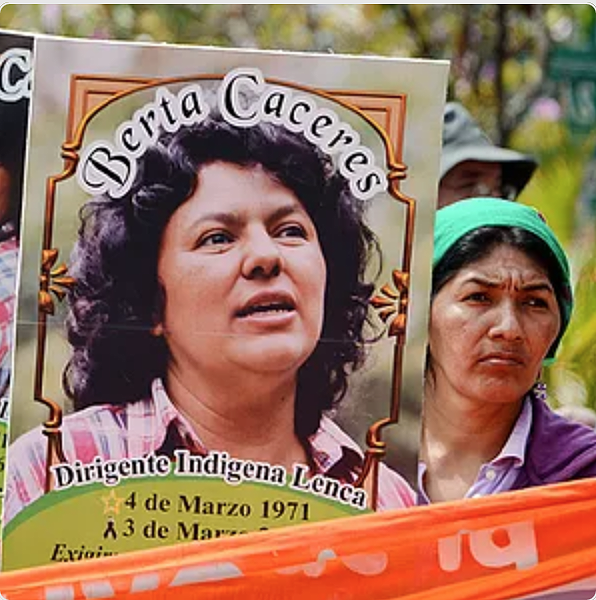
The uptick started after the 2016 assignation of Honduran activist and indigenous leader Berta Caceres, only months after she won the Goldman Environmental Prize for fighting back against the building of dams in her region. While murders are extreme actions, many women who speak up for their communities and the environment also face the threat of gender-based and sexual violence.
But the spirit of women can not be denied. There is hope.
On December 30, 2020 Argentina became the largest nation in Latin America to legalize abortion, after 12 hours of dramatic debate in the Senate. It was a landmark vote in a conservative region and a victory for a grass-roots movement that turned years of rallies into political power.
The effects of the legalization vote are likely to ripple across Latin America, galvanizing abortion-rights advocates throughout the region. The Argentinean green handkerchief, which represents the movement, has begun showing up in other countries where women have poured into the streets demanding greater support for their rights.
Maine Insights, a 501(c)4, connects our main streets with lawmakers in Augusta, highlighting state policies, technological innovations, agriculture, education, community growth and economics with factual analysis, individual profiles and exclusive in-depth coverage. We also report on areas where justice is not being served in the hope to be a contributing catalyst for change.
Your contribution today, will ensure our reporting continues into the future. Please send your donation to 8 Brook St., Solon, ME 04979.
Visit PEN for in-depth coverage of how America is addressing the climate crises. Systemic racism has held back progress, along with the deep pockets of industry that don’t want to change the status quo.
Protect Earth Newsmagazine highlights what lawmakers from the local level on up to the Federal Government are doing to protect the earth. We also report on community ingenuity and innovations that will help the U.S.A. transition to being powered by 100 percent, clean renewable energy. A 501(c)3 project of the Solon Center for Research and Publishing.
LATEST NEWS
SCIENCE MONDAY
Helpful science tips in playful videos that explain principles we all deal with to understand our climate crisis. The PENseries is the creation of Olivia Baaten.




 Maine Insights Newsmagazine